We understand better than anyone that this is such an exciting time. Everything is new. So much is happening, and there's quite a bit to deal with. It's good to know what to expect.
Care pathway
What can
you expect?
From a positive pregnancy test to the postpartum period. What can you expect in the coming months? Check it out here, week by week.

Weekly overview
Week‑by‑week
in detail
4
Positive pregnancy test
You're pregnant, yes, congratulations! What now? You don't need to go to your GP, you can register yourself directly with a midwifery practice that you feel comfortable with. You can also call us with any questions; we understand this is such an exciting time!
7
Early ultrasound
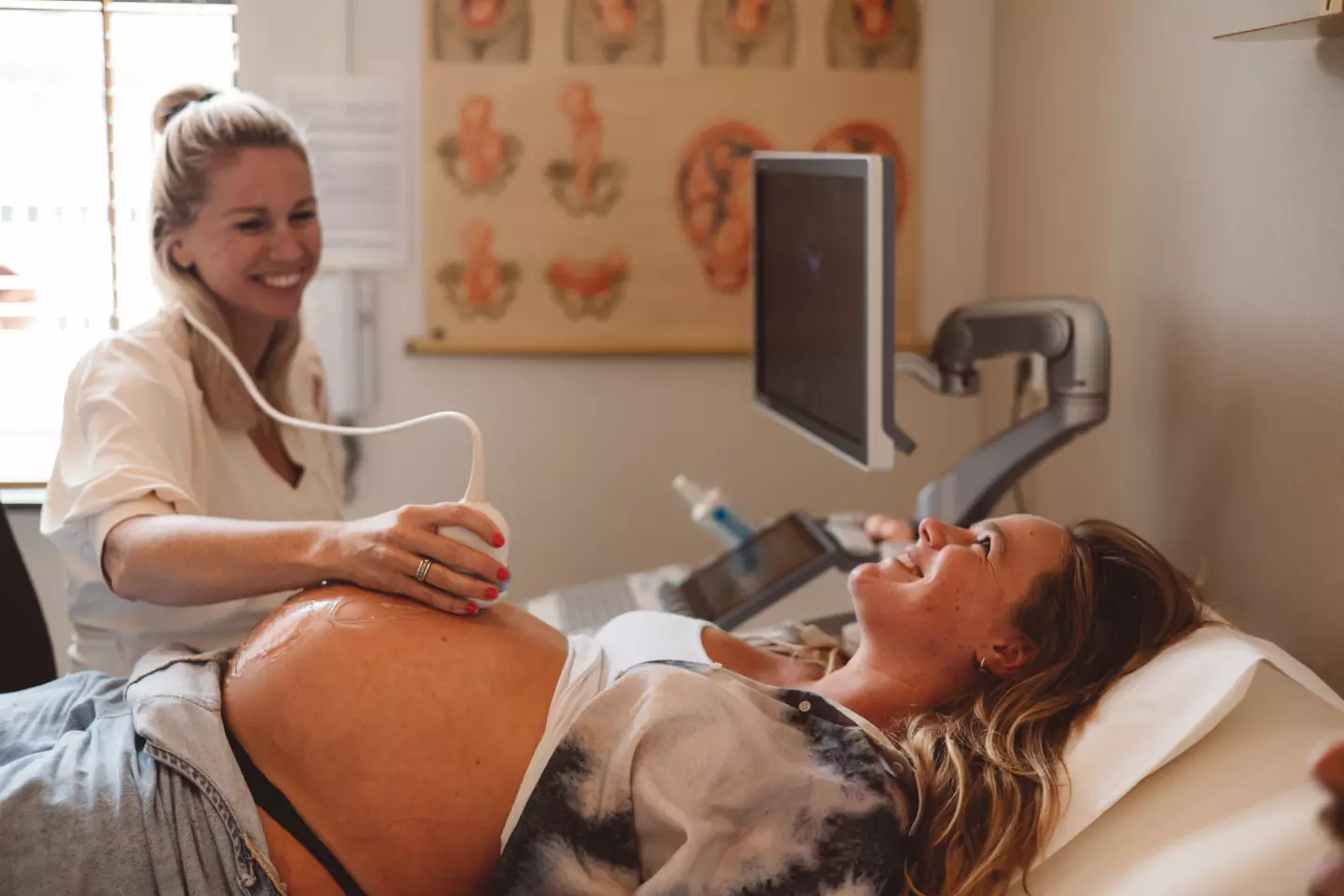
The first exciting scan of your little one, a welcome gift from us! We check whether the pregnancy is in the right place and whether we can see one or more babies.
8
Start of pregnancy check‑ups – Intake
Our first in‑depth meeting! We discuss your situation and health and share a lot of information. We can imagine you have many questions, and we take plenty of time for them.
From now on, your pregnancy check‑ups begin. In the first and second trimester these are every 4 weeks, then every 3 weeks. After that we see you every 2 weeks, and at the end of your pregnancy even every week!
We always measure your blood pressure, monitor the growth of your belly and listen to the baby’s heartbeat. Each time we provide information and answer all your questions.
9
Prenatal screening consultation
If you wish, we can provide counselling about prenatal screening. This includes the NIPT and the 13‑ and 20‑week ultrasounds.
10
Dating scan
This is when we determine your exact due date! To do this, we measure your little one from crown to rump. We can already show you a beautiful side profile!
11
Blood tests and NIPT
At the beginning of the pregnancy, we like to check your blood values to rule out conditions that could pose a risk to your baby.
Another test you can choose is the NIPT: an examination of your baby’s health at the chromosomal level that is possible from 10–11 weeks of pregnancy.
12
Listening to the heartbeat
From this week on, we can hear your little one’s heartbeat with the Doppler. We do this at every check‑up, but you are welcome to come in for this as often as you like.
13
13‑week scan
This is a medical ultrasound that looks for possible physical anomalies. Of course, this scan is not mandatory.
14
Registering for maternity care
If you have not done so yet, this is the time to register for maternity care so you still have options to choose from. The maternity nurse will take care of you in the first week after birth. She monitors your family, your recovery after delivery, and your baby’s development.
We are happy to give you tips about good maternity‑care organisations.
15
Gender reveal scan
Can’t wait to find out your baby’s gender? Book your gender scan! We do it between 15–16 weeks. You’ll get a gender gift to take home!
18
Acknowledgement
If you are not married or in a registered partnership, you can acknowledge your child during the pregnancy at the municipality.
20
20‑week scan
Just like the 13‑week scan, we examine your little one in detail. The 20‑week scan is also a medical ultrasound; we can see more now because your baby has grown a lot bigger.
21
First baby movements!
During this period, you will feel your baby’s first movements. It starts as a bubbling sensation, soon turning into unmistakable kicks and somersaults!
22
Whooping cough vaccination
From this week (up to 2 weeks before your due date), you can get the whooping cough vaccine. Your body will produce antibodies and pass them on to your baby, protecting them from birth.
24
Pregnancy course
Want to take a course? This is the perfect time to start. From hypnobirthing and pregnancy yoga to birth prep – ask us for tips!
26
Discussing birth preferences
You have already received our online birth course. Do you want to give birth at home? In the hospital? We discuss your wishes together.
29
Iron levels check
We often see iron levels drop during pregnancy. At 30 weeks, we check your levels again so you can start supplements if needed.
30
Growth scan
We don’t do this scan as standard. There are certain indications for a growth scan; if it applies to you, we will discuss it in detail.
34
Maternity leave?!
From now on, you can start your maternity leave and take a big step back. Don’t demand too much of yourself, listen to your body, take naps during the day and alternate with gentle movement. This is a great time to fully focus on your baby’s arrival.
35
Position scan
Towards the end of pregnancy, we use an ultrasound to check if the baby is head down.
36
Birth instructions + weekly check
We discuss in detail how labour can start, how to recognise contractions and broken waters, and when to call us (you can call anytime, of course!).
From now on, you have weekly appointments with us. We monitor you and your baby closely!
If you plan a home birth, start preparations now; otherwise, pack your hospital bag.
37
You give birth with us!
From 37 weeks, your little one is fully developed and can be born any time. Keep in mind it often takes a bit longer.
38
Postpartum course
You have received our course on the postpartum period. Not gotten to it yet? Now is the perfect time to prepare for life after birth: the start of your new life as parents. Make a postpartum plan together so you know exactly what to expect from each other.
40
Due date
The day you have been looking forward to for so long. Is that cramp a real contraction? Around this time, you might lose your mucus plug and have strong Braxton Hicks. Exciting!
Did you know that most women (70%) give birth after their due date? The term “overdue” isn’t really accurate!
When you have contractions every 4–5 minutes for an hour that last about 60 seconds, your labour is likely starting for real.
41
At 41 weeks
Most women have given birth by now, about 85%.
- Extra checks (amniotic fluid measurement, heart rate monitoring)
- Option for membrane sweep
- Option for induction (in hospital)
42
Induction
If needed, you will be induced.
Baby!
Birth
So exciting, labour begins! As soon as contractions are regular, we come to you. At home or in hospital, we are there as you wish!
+1
day
Your little one is here!!!
Now it really begins. The first postpartum days are often intense: you have become parents, you feel your first worries (is everything okay?), and you are recovering. No worries, we are on call for you. We visit, and call us anytime you have concerns – even at night.
+4
days
Home check
What else do we do during the postpartum week? We discuss the birth in detail, check your little one and mum. We especially look at you as a family.
On this day, if desired, we also do the heel prick: a small blood draw to screen your baby for rare hereditary metabolic diseases.
+7
days
Home check
The end of your first postpartum week, when maternity care wraps up. We discuss what to expect next week – no worries, we will be in touch in 1–2 weeks! This is not standard, but very much recommended!
+14
days
Home check
We discuss how the past week without maternity care has gone. What challenges are you facing? How is feeding going? How is your recovery? We can also discuss contraception.
+2-3
weeks
How are you doing?
2–3 weeks after birth, we check in again. How are you all doing? How is your recovery? How is feeding? We can also discuss contraception.
+6
weeks
Postpartum check-up
Six weeks after giving birth, you’ll have your final check-up at our practice. Together, we’ll look back on your pregnancy, birth and postpartum period, while also completing your final medical checks.
Highlight
6d/8k ultrasound bringing your baby’s first moments to life in stunning detail.
Get yourself
the best of care
today
the best of care
today